Search Badges Account

Emergent Readers

Emergent Readers

Illustration for Emergent Readers
Kasanon No Nakabutbuteng ni Maestra?

Kasanon No Nakabutbuteng ni Maestra?

Week 1.

Author: Angeli Ludovico

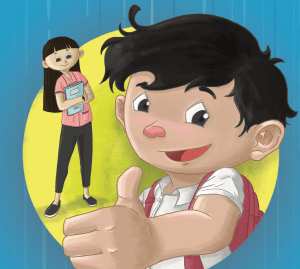
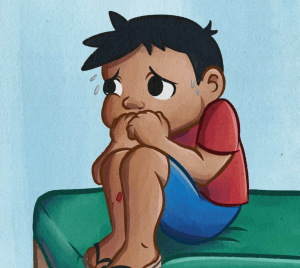
The night before the first day of school, a little boy excitedly prepares his things with his father. Then, he starts to imagine all kinds of things that make him anxious about school and tells his father about them. The next morning, his anxiety continues as his parents take him to school. When they arrive in school, he sees many children playing. He goes to his classroom and is greeted by the friendly teacher. The other children begin to arrive and they all look friendly. This makes the boy feel better. He then sees a classmate who looks just as afraid as he was. He approached her and they become friends. The Kinder class begins - they sing songs, work on blocks, color some pictures and listen to stories. The little boy enjoyed his first day of school and begins to look forward to school everyday.

2017 by U.S.Agency for International Development (USAID) Produced for the Department of Education under the USAID Basa Pilipinas Activity Basa Pilipinas is USAID/Philippines’ flagship basic education activity in support of the Philippine Government’s early grade reading program. Implemented in close collaboration with the Department of Education (DepEd), Basa Pilipinas aims to improve the reading skills for at least one million early grade students in Filipino, English and two mother tongue languages (Ilokano and Sinugbuanong Binisaya).This will be achieved by improving reading instruction, reading delivery systems, and access to quality reading materials. Adapted works (e.g., stories, poems, songs, illustrations, photographs, etc.) included in this storybook were used with permission from the copyright owners. Every effort has been exerted to locate and seek permission to use these materials from their respective copyright owners. The publisher does not represent nor claim ownership over them.

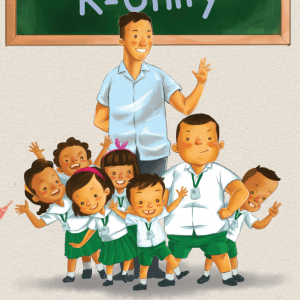
Dumanonkayo Ditoy K-Unity

Dumanonkayo Ditoy K-Unity

Week 4.

Author: Ariana Santoalla

A Kinder class is working on a group activity. They must create a banner for their classroom. The teacher brainstorms ideas with the class. The children begin to draw on their banner and decorate it. One boy starts to draw flowers on the banner. When the other boys see this, they begin to tease him and laugh at him. The boy explains that flowers remind him of his father and of his family and that this makes him happy. The teacher talks to the class and explains that everybody is unique and that different people may have different likes and dislikes.

2017 by U.S.Agency for International Development (USAID) Produced for the Department of Education under the USAID Basa Pilipinas Activity Basa Pilipinas is USAID/Philippines’ flagship basic education activity in support of the Philippine Government’s early grade reading program. Implemented in close collaboration with the Department of Education (DepEd), Basa Pilipinas aims to improve the reading skills for at least one million early grade students in Filipino, English and two mother tongue languages (Ilokano and Sinugbuanong Binisaya).This will be achieved by improving reading instruction, reading delivery systems, and access to quality reading materials. Adapted works (e.g., stories, poems, songs, illustrations, photographs, etc.) included in this storybook were used with permission from the copyright owners. Every effort has been exerted to locate and seek permission to use these materials from their respective copyright owners. The publisher does not represent nor claim ownership over them.

Rupa: Maysa a Libro Dagiti Rikna

Rupa: Maysa a Libro Dagiti Rikna

Week 5.

Author: Yayi Espenilla-Fua

The book shows the many faces of children when they feel different emotions in different situations. Children feel happy when they play with playmates, when they read a book with a parent, when they watch a funny show with the family, or even when they are just by themselves. Children may feel sad when a parent leaves, a pet dies, when they are scolded, when they have no one to play with, when they are sick, when their parents are too busy, or when they are fighting with a sibling. They may also feel angry when they do not get what they want, when they fight with each other or with a parent, or when somebody takes away their toy. There are times when children also feel frightened - when it is dark, when there is lightning and thunder, when they imagine monsters or ghosts, when they have a bad dream, or when they break something in the house and their parents get mad. Often, children also feel shy especially when entering the classroom for the first time, when meeting another adult, when being befriended by another child, when performing, or being given something. But, they can also be brave when they defend each other from bullies, when they go to the doctor, or when they go inside the school or the classroom on their own.

2017 by U.S.Agency for International Development (USAID) Produced for the Department of Education under the USAID Basa Pilipinas Activity Basa Pilipinas is USAID/Philippines’ flagship basic education activity in support of the Philippine Government’s early grade reading program. Implemented in close collaboration with the Department of Education (DepEd), Basa Pilipinas aims to improve the reading skills for at least one million early grade students in Filipino, English and two mother tongue languages (Ilokano and Sinugbuanong Binisaya).This will be achieved by improving reading instruction, reading delivery systems, and access to quality reading materials. Adapted works (e.g., stories, poems, songs, illustrations, photographs, etc.) included in this storybook were used with permission from the copyright owners. Every effort has been exerted to locate and seek permission to use these materials from their respective copyright owners. The publisher does not represent nor claim ownership over them.

Pudno nga Aggagayyem

Pudno nga Aggagayyem

Week 7.

Author: May-Ann Grace Samputon

Five friends - Eyes, Ears, Nose, Tongue and Skin - live in a place called Face Town. They are playing happily when Nose trips. He thinks that Eye pushed him so he gets angry and tells everybody that he is the most important among all of them. They all get into an argument, each one thinking that he or she is the most important. Skin, who was just listening, tells them that they should not be fighting about who is the most important because all of them are equally important.

2017 by U.S.Agency for International Development (USAID) Produced for the Department of Education under the USAID Basa Pilipinas Activity Basa Pilipinas is USAID/Philippines’ flagship basic education activity in support of the Philippine Government’s early grade reading program. Implemented in close collaboration with the Department of Education (DepEd), Basa Pilipinas aims to improve the reading skills for at least one million early grade students in Filipino, English and two mother tongue languages (Ilokano and Sinugbuanong Binisaya).This will be achieved by improving reading instruction, reading delivery systems, and access to quality reading materials. Adapted works (e.g., stories, poems, songs, illustrations, photographs, etc.) included in this storybook were used with permission from the copyright owners. Every effort has been exerted to locate and seek permission to use these materials from their respective copyright owners. The publisher does not represent nor claim ownership over them.
Maysa a Sorpresa a para ken ni Roy

Maysa a Sorpresa a para ken ni Roy

Week 8.

Author: Angeli Ludovico

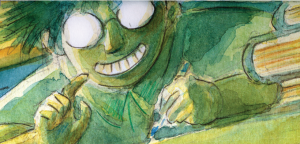
Roy’s parents take him to the beach for his 5th birthday. Roy smells the breeze of the beach, walks barefoot on the hot sand, swims in the cool sea, builds a sand castle with the rough sand and plays catch with his mother with a smooth beach ball. While playing, Roy trips on a hard rock and is bruised. Roy’s father lays him down on a soft blanket and nurses his wound. Then, Roy’s parents bring out his birthday cake and he eats the sweet cake happily.

2017 by U.S.Agency for International Development (USAID) Produced for the Department of Education under the USAID Basa Pilipinas Activity Basa Pilipinas is USAID/Philippines’ flagship basic education activity in support of the Philippine Government’s early grade reading program. Implemented in close collaboration with the Department of Education (DepEd), Basa Pilipinas aims to improve the reading skills for at least one million early grade students in Filipino, English and two mother tongue languages (Ilokano and Sinugbuanong Binisaya).This will be achieved by improving reading instruction, reading delivery systems, and access to quality reading materials. Adapted works (e.g., stories, poems, songs, illustrations, photographs, etc.) included in this storybook were used with permission from the copyright owners. Every effort has been exerted to locate and seek permission to use these materials from their respective copyright owners. The publisher does not represent nor claim ownership over them.
Ni Rose ken ni Alma

Ni Rose ken ni Alma

Week 9.

Author: Pablito Petallar

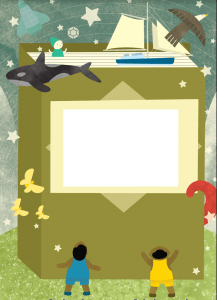
Rose and Alma are best friends who like to play and do many things together. But, they are different in many ways. Rose sleeps early every night, so she wakes up early and well-rested the next morning. She helps her mother cook breakfast and eats a healthy meal. She takes a bath and dresses up very neatly. Alma, on the other hand, watches TV all night so she has difficulty waking up in the morning. Because she almost always wakes up late, she does not have time to eat breakfast and take a bath. She dresses up hurriedly, too. Rose arrives in school early while Alma shows up late. During snack time, Rose eats healthful food and drinks milk while Alma eats only eats sweets, soda and chips. In the classroom, Rose does her tasks well while Alma often falls asleep. Since Alma does not take a bath before going to school, none of the children want to play with her. Rose invites Alma to play jump rope with her, but Alma trips and hurts herself because she easily gets tired. Rose comforts Alma and tells her how she can be strong and healthy. From then on, Alma sleeps early, takes a bath in the morning, and eats healthy food. Alma changes and becomes happier and healthier.

2017 by U.S.Agency for International Development (USAID) Produced for the Department of Education under the USAID Basa Pilipinas Activity Basa Pilipinas is USAID/Philippines’ flagship basic education activity in support of the Philippine Government’s early grade reading program. Implemented in close collaboration with the Department of Education (DepEd), Basa Pilipinas aims to improve the reading skills for at least one million early grade students in Filipino, English and two mother tongue languages (Ilokano and Sinugbuanong Binisaya).This will be achieved by improving reading instruction, reading delivery systems, and access to quality reading materials. Adapted works (e.g., stories, poems, songs, illustrations, photographs, etc.) included in this storybook were used with permission from the copyright owners. Every effort has been exerted to locate and seek permission to use these materials from their respective copyright owners. The publisher does not represent nor claim ownership over them.
Maysan a Manang ni Maria

Maysan a Manang ni Maria

Week 10.

Author: Angeli Ludovico

Maria comes home from school excited to show her parents the star that her teacher gave her. But, she sees that her parents are busy with her new baby sister and hardly noticed her. Maria feels sad because she thinks that her parents have forgotten about her and only like to play with the new baby. Maria’s father talks to Maria and shows her photos of when she was still younger. They think about the times when Maria could not yet feed herself, walk or reach things that are put on high shelves. Her father explains that, like her, the new baby also needs help since she is still very little. Maria, on the other hand, has grown and could now do many things by herself. Maria begins to understand and helps her mother and father take care of her baby sister.

2017 by U.S.Agency for International Development (USAID) Produced for the Department of Education under the USAID Basa Pilipinas Activity Basa Pilipinas is USAID/Philippines’ flagship basic education activity in support of the Philippine Government’s early grade reading program. Implemented in close collaboration with the Department of Education (DepEd), Basa Pilipinas aims to improve the reading skills for at least one million early grade students in Filipino, English and two mother tongue languages (Ilokano and Sinugbuanong Binisaya).This will be achieved by improving reading instruction, reading delivery systems, and access to quality reading materials. Adapted works (e.g., stories, poems, songs, illustrations, photographs, etc.) included in this storybook were used with permission from the copyright owners. Every effort has been exerted to locate and seek permission to use these materials from their respective copyright owners. The publisher does not represent nor claim ownership over them.
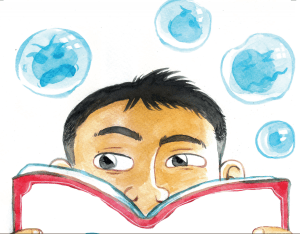
Ti Dakkel nga Aba

Ti Dakkel nga Aba

Week 11.

Author: Rosemarie Lofranco

Tatay Gardo is given a gabi plant by the barangay officials as a prize for having the best home garden. He plants the gabi plant and it grows. But when the time comes for it to be harvested, he could not pull the gabi plant up. He asks help from his wife, their three children and their pet dog. They pull and pull and, finally, out comes the big gabi plant. The gabi plant was so big that they are able to cook an entire pot of gabi stew and shares it with other members of their family.

2017 by U.S.Agency for International Development (USAID) Produced for the Department of Education under the USAID Basa Pilipinas Activity Basa Pilipinas is USAID/Philippines’ flagship basic education activity in support of the Philippine Government’s early grade reading program. Implemented in close collaboration with the Department of Education (DepEd), Basa Pilipinas aims to improve the reading skills for at least one million early grade students in Filipino, English and two mother tongue languages (Ilokano and Sinugbuanong Binisaya).This will be achieved by improving reading instruction, reading delivery systems, and access to quality reading materials. Adapted works (e.g., stories, poems, songs, illustrations, photographs, etc.) included in this storybook were used with permission from the copyright owners. Every effort has been exerted to locate and seek permission to use these materials from their respective copyright owners. The publisher does not represent nor claim ownership over them.
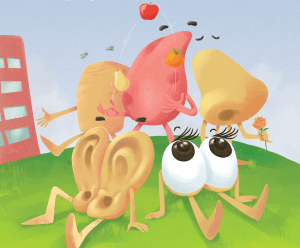
Ti Umok

Ti Umok

Week 20.

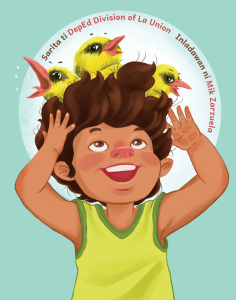
Author: DepEd Division of La Union

Tito saw a nest with baby birds in it. He wanted to get the birds from the nest to play with them, but Tito's mother told him not to. She explains how the mother bird takes care of its babies by building a nest for them and by bringing them food just like how Tito's mother and father takes care of him. The mother bird and her babies will feel sad if they are separated, just like how Tito will feel sad if he is separated from his mother and father. Tito realizes that his mother is right and watches as the mother bird returns and sings with her babies.

2017 by U.S.Agency for International Development (USAID) Produced for the Department of Education under the USAID Basa Pilipinas Activity Basa Pilipinas is USAID/Philippines’ flagship basic education activity in support of the Philippine Government’s early grade reading program. Implemented in close collaboration with the Department of Education (DepEd), Basa Pilipinas aims to improve the reading skills for at least one million early grade students in Filipino, English and two mother tongue languages (Ilokano and Sinugbuanong Binisaya).This will be achieved by improving reading instruction, reading delivery systems, and access to quality reading materials. Adapted works (e.g., stories, poems, songs, illustrations, photographs, etc.) included in this storybook were used with permission from the copyright owners. Every effort has been exerted to locate and seek permission to use these materials from their respective copyright owners. The publisher does not represent nor claim ownership over them.
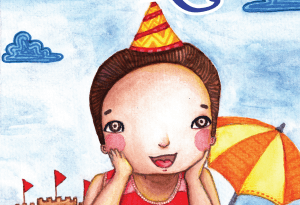
Ditoy Lugarmi

Ditoy Lugarmi

Week 21.

Author: Ailene Amor

A little boy takes you around his town and shows different aspects of their life within the community. He talks about the mountains and the sea and the farmers and fisherfolks that work tirelessly. He also talks about the different ways of going around their town. As he enters the town proper, he shows off their big city hall and the small barangay hall. He goes inside the town center where the school, hospital, church, market and park can be seen. The little boy talks about the activities that they do in groups and as a community. Finally, he talks about the different families that are in his community and his own small family.

2017 by U.S.Agency for International Development (USAID) Produced for the Department of Education under the USAID Basa Pilipinas Activity Basa Pilipinas is USAID/Philippines’ flagship basic education activity in support of the Philippine Government’s early grade reading program. Implemented in close collaboration with the Department of Education (DepEd), Basa Pilipinas aims to improve the reading skills for at least one million early grade students in Filipino, English and two mother tongue languages (Ilokano and Sinugbuanong Binisaya).This will be achieved by improving reading instruction, reading delivery systems, and access to quality reading materials. Adapted works (e.g., stories, poems, songs, illustrations, photographs, etc.) included in this storybook were used with permission from the copyright owners. Every effort has been exerted to locate and seek permission to use these materials from their respective copyright owners. The publisher does not represent nor claim ownership over them.
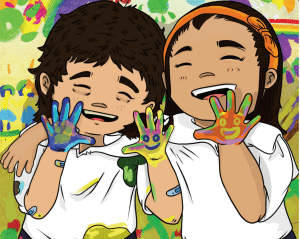
Ania ti Gatangenmi?

Ania ti Gatangenmi?

Week 27.

Author: Cristopher Halagao

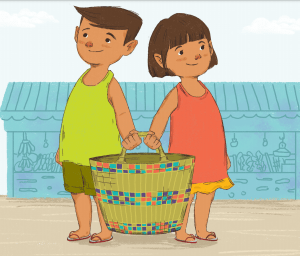
Mar and Kit go to the market with their mother and father. They go to the wet section to buy fish and meat. They also visit the dry goods section to buy fruits and vegetables. When they have finished shopping for food, Mar and Kit’s parents ask them what else they need to buy. Their mother gives them money and lets them decide what to use it for. They walk around the market and see things they want to buy with their money. Mar wants to buy a pet, get new clothes, shoes and toys while Kit wants to buy sweets and accessories. They counted their money to see if they have enough to buy all the things they want to buy and realize that it’s not what they have is not enough. They then come to realize that they really do not need the things they want to buy. In the end, Mar and Kit decide to use half of the money to buy crayons which they need for school but do not have yet. They save the rest of their money in their coin banks at home.

2017 by U.S.Agency for International Development (USAID) Produced for the Department of Education under the USAID Basa Pilipinas Activity Basa Pilipinas is USAID/Philippines’ flagship basic education activity in support of the Philippine Government’s early grade reading program. Implemented in close collaboration with the Department of Education (DepEd), Basa Pilipinas aims to improve the reading skills for at least one million early grade students in Filipino, English and two mother tongue languages (Ilokano and Sinugbuanong Binisaya).This will be achieved by improving reading instruction, reading delivery systems, and access to quality reading materials. Adapted works (e.g., stories, poems, songs, illustrations, photographs, etc.) included in this storybook were used with permission from the copyright owners. Every effort has been exerted to locate and seek permission to use these materials from their respective copyright owners. The publisher does not represent nor claim ownership over them.
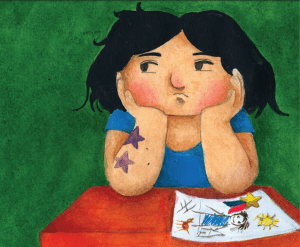
Nakasaganan ni Niño

Nakasaganan ni Niño

Week 39.

Author: Maria Corazon Odtohan

Niño is afraid to move up to Grade 1. He says he is afraid of who will be his new teacher and classmates. His teacher assures Niño that he is ready by looking back at the things they did in Kindergarten during the past year, how much fun they had and how well he did in the activities and with his classmates. Niño realizes that he is prepared for Grade 1 and looks forward to having as much fun as he did when he was in Kindergarten.

2017 by U.S.Agency for International Development (USAID) Produced for the Department of Education under the USAID Basa Pilipinas Activity Basa Pilipinas is USAID/Philippines’ flagship basic education activity in support of the Philippine Government’s early grade reading program. Implemented in close collaboration with the Department of Education (DepEd), Basa Pilipinas aims to improve the reading skills for at least one million early grade students in Filipino, English and two mother tongue languages (Ilokano and Sinugbuanong Binisaya).This will be achieved by improving reading instruction, reading delivery systems, and access to quality reading materials. Adapted works (e.g., stories, poems, songs, illustrations, photographs, etc.) included in this storybook were used with permission from the copyright owners. Every effort has been exerted to locate and seek permission to use these materials from their respective copyright owners. The publisher does not represent nor claim ownership over them.
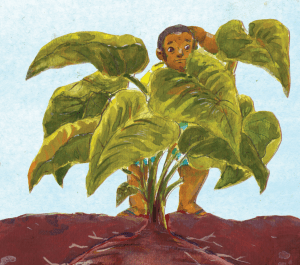
Ti Tagtagainep ni Mat

Ti Tagtagainep ni Mat

Week 6.

Author: May-Ann Grace Samputon

Mat is a healthy boy who just loves to lie down all day. One day, his mother asks him to help her fetch some water. Mat pretends that his hand and feet are in pain so he does not have to do what his mother asks. His mother becomes worried and asks him to go back to sleep. While sleeping, Mat dreams that a large snake is chasing him. He wants to climb a tree but he has no hands and feet. The snake is about to get him but Mat wakes up! He wakes up scared and crying and apologize to his mother for lying. From then on, he always helps his mother do chores around the house.

2017 by U.S.Agency for International Development (USAID) Produced for the Department of Education under the USAID Basa Pilipinas Activity Basa Pilipinas is USAID/Philippines’ flagship basic education activity in support of the Philippine Government’s early grade reading program. Implemented in close collaboration with the Department of Education (DepEd), Basa Pilipinas aims to improve the reading skills for at least one million early grade students in Filipino, English and two mother tongue languages (Ilokano and Sinugbuanong Binisaya).This will be achieved by improving reading instruction, reading delivery systems, and access to quality reading materials. Adapted works (e.g., stories, poems, songs, illustrations, photographs, etc.) included in this storybook were used with permission from the copyright owners. Every effort has been exerted to locate and seek permission to use these materials from their respective copyright owners. The publisher does not represent nor claim ownership over them.
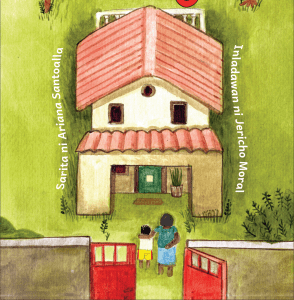
Naragsak no Agkadua

Naragsak no Agkadua

Week 3.

Author: Angeli Ludovico

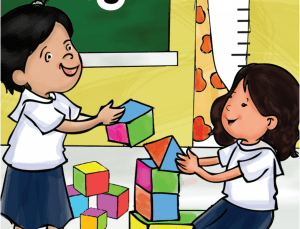
The teacher asks her Kindergarten class to draw something that they can do by themselves. One girl is very happy with the activity because she loves to draw. During snack time, the teacher approaches the girl and asks her why she is eating by herself and is not playing with the other children. The girl says she is shy and thinks that the other children may not like her. After snacks, the teacher asks her the class to work in pairs and draw what they can do together. One outgoing girl approaches the shy girl and asks her to be her partner. They start to draw the things that they can do together. After drawing, the teacher asks the partners to build a tower of blocks together. The two girls disagree on the kind of block tower that they want to make. The teacher talks to them and asks how they can work together. The two girls agree on a design that will make both of them happy. From then on, the two girls become inseparable best friends. They also learn how to work well with their other classmates even when they do not agree at first.

2017 by U.S.Agency for International Development (USAID) Produced for the Department of Education under the USAID Basa Pilipinas Activity Basa Pilipinas is USAID/Philippines’ flagship basic education activity in support of the Philippine Government’s early grade reading program. Implemented in close collaboration with the Department of Education (DepEd), Basa Pilipinas aims to improve the reading skills for at least one million early grade students in Filipino, English and two mother tongue languages (Ilokano and Sinugbuanong Binisaya).This will be achieved by improving reading instruction, reading delivery systems, and access to quality reading materials. Adapted works (e.g., stories, poems, songs, illustrations, photographs, etc.) included in this storybook were used with permission from the copyright owners. Every effort has been exerted to locate and seek permission to use these materials from their respective copyright owners. The publisher does not represent nor claim ownership over them.
Iti Pagadalanmi

Iti Pagadalanmi

Week 2.

Author: Rosemarie Lofranco

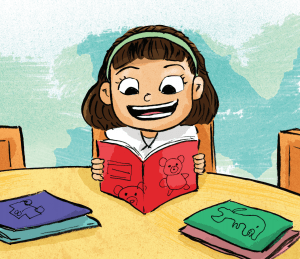
The Kinder class is set to take a tour around the school. They will get to know the different people in school, where they work, and what they do. The teacher paired the children up in a “buddy system” and reminded them to stay with the group so they will not get lost. They went to the principal’s office, the library, the canteen and the clinic. One boy was excited to read the books in the library and told his “buddy” that they should go back there. They did go back to the library and looked at different books. The Kinder class arrives at the school grounds where the teacher gives them time to play with their classmates. She notices, however, that there are two children missing. The librarian then comes with the two children with him. The teacher talked to the two children and told them that she was worried when she could not find them. She reminded them about the rules and said that they should have stayed with the class. The two children apologized to their teacher and promised that they will not do it again. The whole Kinder class then went to the library to read some books.

2017 by U.S.Agency for International Development (USAID) Produced for the Department of Education under the USAID Basa Pilipinas Activity Basa Pilipinas is USAID/Philippines’ flagship basic education activity in support of the Philippine Government’s early grade reading program. Implemented in close collaboration with the Department of Education (DepEd), Basa Pilipinas aims to improve the reading skills for at least one million early grade students in Filipino, English and two mother tongue languages (Ilokano and Sinugbuanong Binisaya).This will be achieved by improving reading instruction, reading delivery systems, and access to quality reading materials. Adapted works (e.g., stories, poems, songs, illustrations, photographs, etc.) included in this storybook were used with permission from the copyright owners. Every effort has been exerted to locate and seek permission to use these materials from their respective copyright owners. The publisher does not represent nor claim ownership over them.