
Search Badges Account

Ang Bag-ong Laybrari

Book in Sinugbuanong Binisaya

Week 18.

Author: Jonellie Reynes-Santos

A school principal wanted to build a library for the school. She calls the parents to a meeting and asks for their help. The parents thought about the project and planned how to build the library. The next morning, fathers and mothers come to school with tools, building materials, pots, pans and food. Some cut, hammer, sand and painted while others prepare food. On the last day of the week, the library is finally done!

Content reviewed by Dr. Jocelyn Tuguinayo, Department of Education – Bureau of Learning Delivery Title translations reviewed by the Department of Education – Region 7 Curriculum and Learning Management Division 2017 by U.S.Agency for International Development (USAID) Produced for the Department of Education under the USAID Basa Pilipinas Activity Basa Pilipinas is USAID/Philippines’ flagship basic education activity in support of the Philippine Government’s early grade reading program. Implemented in close collaboration with the Department of Education (DepEd), Basa Pilipinas aims to improve the reading skills for at least one million early grade students in Filipino, English and two mother tongue languages (Ilokano and Sinugbuanong Binisaya).This will be achieved by improving reading instruction, reading delivery systems, and access to quality reading materials. The publisher does not represent nor claim ownership over them.

Published by USAID • License:

Published by USAID

License:

Similar content

Hain na Si Nanay ug Tatay?

Hain na Si Nanay ug Tatay?

Week 13.

Author: Glenda Darlene Garcia

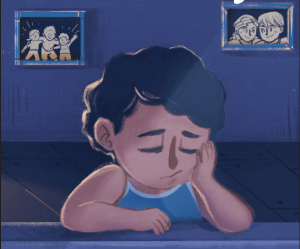
A little boy looks outside the window eagerly waiting for his parents. He gets excited upon hearing a tricycle pass by but no mother or father comes down from it. He looks at other members of his family doing his or her task to help out in the house. Despite this, he still feels sad without his mother and father. The other family members see the little boy and comfort him. They explain why mother and father need to work. Suddenly, the moment that the little boy has been waiting for has arrived—his mother and father are back from work! They happily spend the night together.

Content reviewed by Dr. Jocelyn Tuguinayo, Department of Education – Bureau of Learning Delivery Title translations reviewed by the Department of Education – Region 7 Curriculum and Learning Management Division 2017 by U.S.Agency for International Development (USAID) Produced for the Department of Education under the USAID Basa Pilipinas Activity Basa Pilipinas is USAID/Philippines’ flagship basic education activity in support of the Philippine Government’s early grade reading program. Implemented in close collaboration with the Department of Education (DepEd), Basa Pilipinas aims to improve the reading skills for at least one million early grade students in Filipino, English and two mother tongue languages (Ilokano and Sinugbuanong Binisaya).This will be achieved by improving reading instruction, reading delivery systems, and access to quality reading materials. The publisher does not represent nor claim ownership over them.
Ang Salag

Ang Salag

Week 20.

Author: DepEd Division of La Union

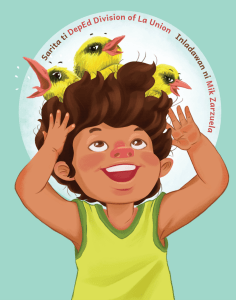
Tito saw a nest with baby birds in it. He wanted to get the birds from the nest to play with them, but Tito's mother told him not to. She explains how the mother bird takes care of its babies by building a nest for them and by bringing them food just like how Tito's mother and father takes care of him. The mother bird and her babies will feel sad if they are separated, just like how Tito will feel sad if he is separated from his mother and father. Tito realizes that his mother is right and watches as the mother bird returns and sings with her babies.

Content reviewed by Dr. Jocelyn Tuguinayo, Department of Education – Bureau of Learning Delivery Title translations reviewed by the Department of Education – Region 7 Curriculum and Learning Management Division 2017 by U.S.Agency for International Development (USAID) Produced for the Department of Education under the USAID Basa Pilipinas Activity Basa Pilipinas is USAID/Philippines’ flagship basic education activity in support of the Philippine Government’s early grade reading program. Implemented in close collaboration with the Department of Education (DepEd), Basa Pilipinas aims to improve the reading skills for at least one million early grade students in Filipino, English and two mother tongue languages (Ilokano and Sinugbuanong Binisaya).This will be achieved by improving reading instruction, reading delivery systems, and access to quality reading materials. The publisher does not represent nor claim ownership over them.
Diri sa Amo

Diri sa Amo

Week 21.

Author: Ailene Amor

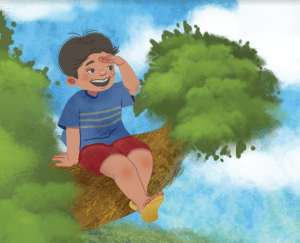
A little boy takes you around his town and shows different aspects of their life within the community. He talks about the mountains and the sea and the farmers and fisherfolks that work tirelessly. He also talks about the different ways of going around their town. As he enters the town proper, he shows off their big city hall and the small barangay hall. He goes inside the town center where the school, hospital, church, market and park can be seen. The little boy talks about the activities that they do in groups and as a community. Finally, he talks about the different families that are in his community and his own small family.

Content reviewed by Dr. Jocelyn Tuguinayo, Department of Education – Bureau of Learning Delivery Title translations reviewed by the Department of Education – Region 7 Curriculum and Learning Management Division 2017 by U.S.Agency for International Development (USAID) Produced for the Department of Education under the USAID Basa Pilipinas Activity Basa Pilipinas is USAID/Philippines’ flagship basic education activity in support of the Philippine Government’s early grade reading program. Implemented in close collaboration with the Department of Education (DepEd), Basa Pilipinas aims to improve the reading skills for at least one million early grade students in Filipino, English and two mother tongue languages (Ilokano and Sinugbuanong Binisaya).This will be achieved by improving reading instruction, reading delivery systems, and access to quality reading materials. The publisher does not represent nor claim ownership over them.